

Specialized Services
Allergy Testing
Allergy testing identifies the environmental allergens that may be triggering a pet’s itching, skin disease, or recurring ear problems.
What it is
Allergy testing is the process of identifying specific allergens that may be causing reactions in an individual animal. This is currently the only reliable method for identifying which environmental allergens are responsible for symptoms associated with atopic dermatitis (skin and ear disease caused by reactions to environmental allergens).
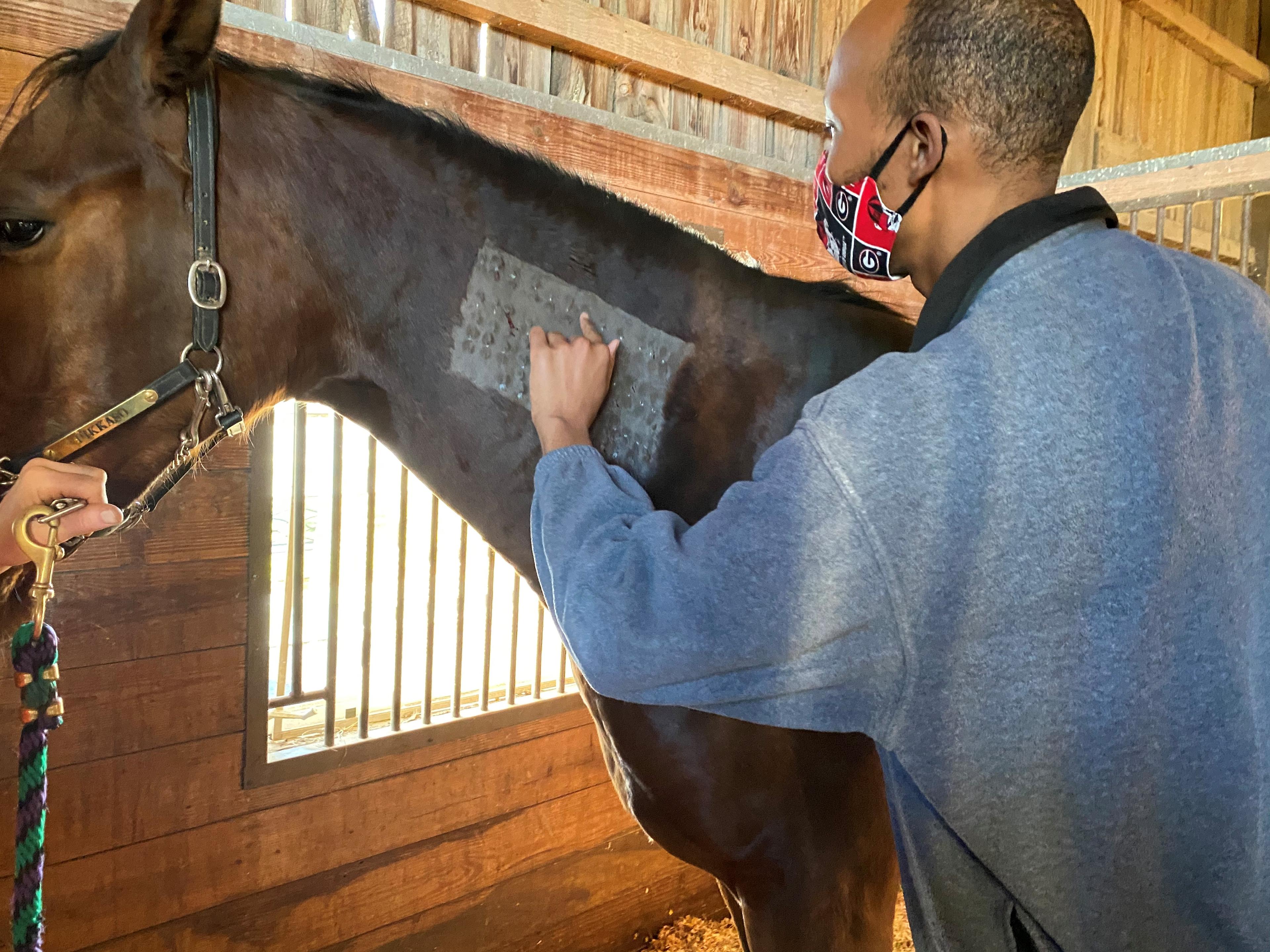
Atopic dermatitis is diagnosed by a veterinary dermatologist by identifying typical age, history, skin and ear lesions, and by ruling out other potential causes. Once a diagnosis of atopic dermatitis is made allergy testing can be performed by intradermal (skin) allergy test or blood test. The intradermal allergy test is the gold standard for identification of potential allergens and is performed by Animal Dermatology Clinic dermatologists in dogs, cats, horses and other species.
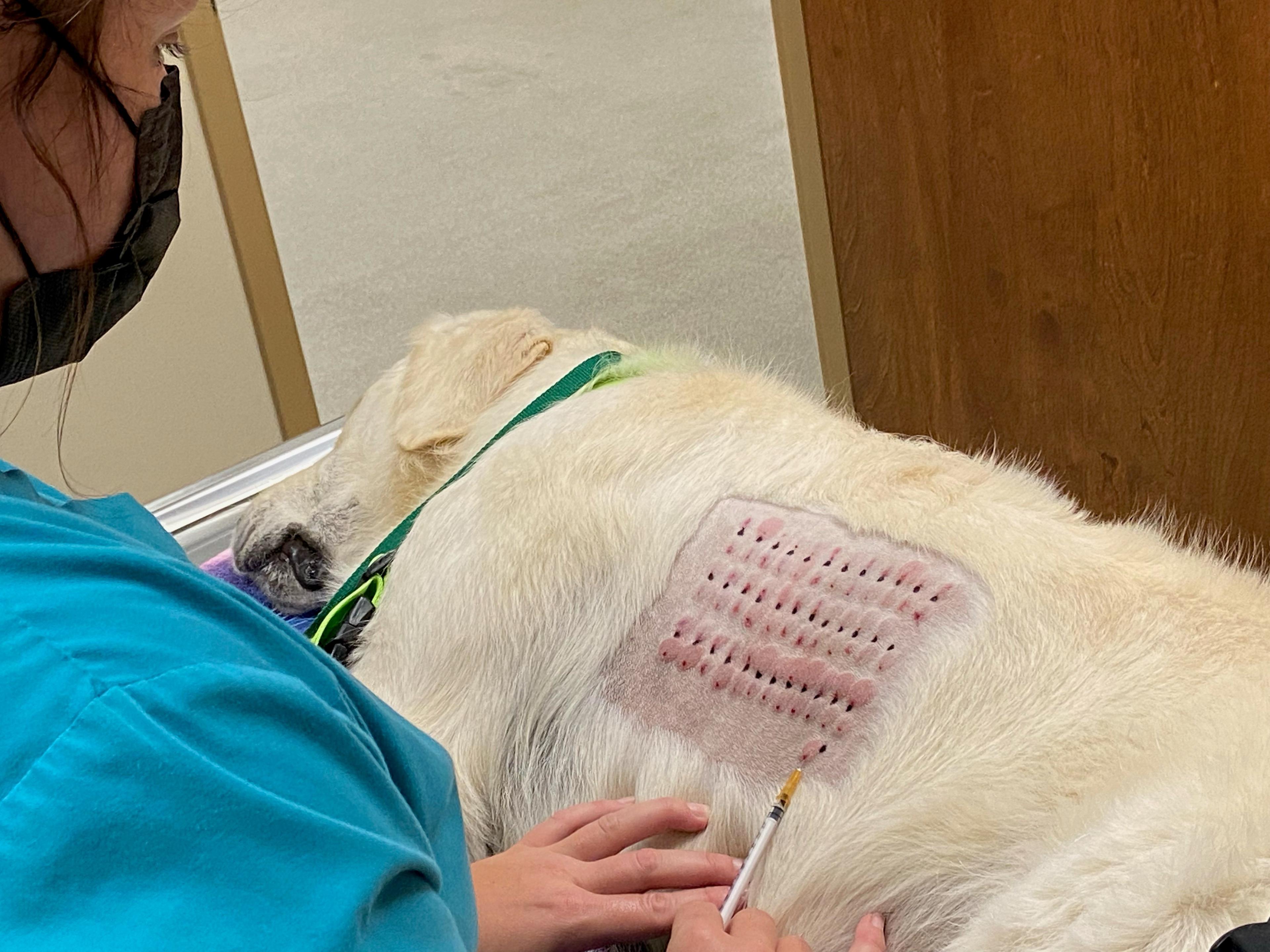
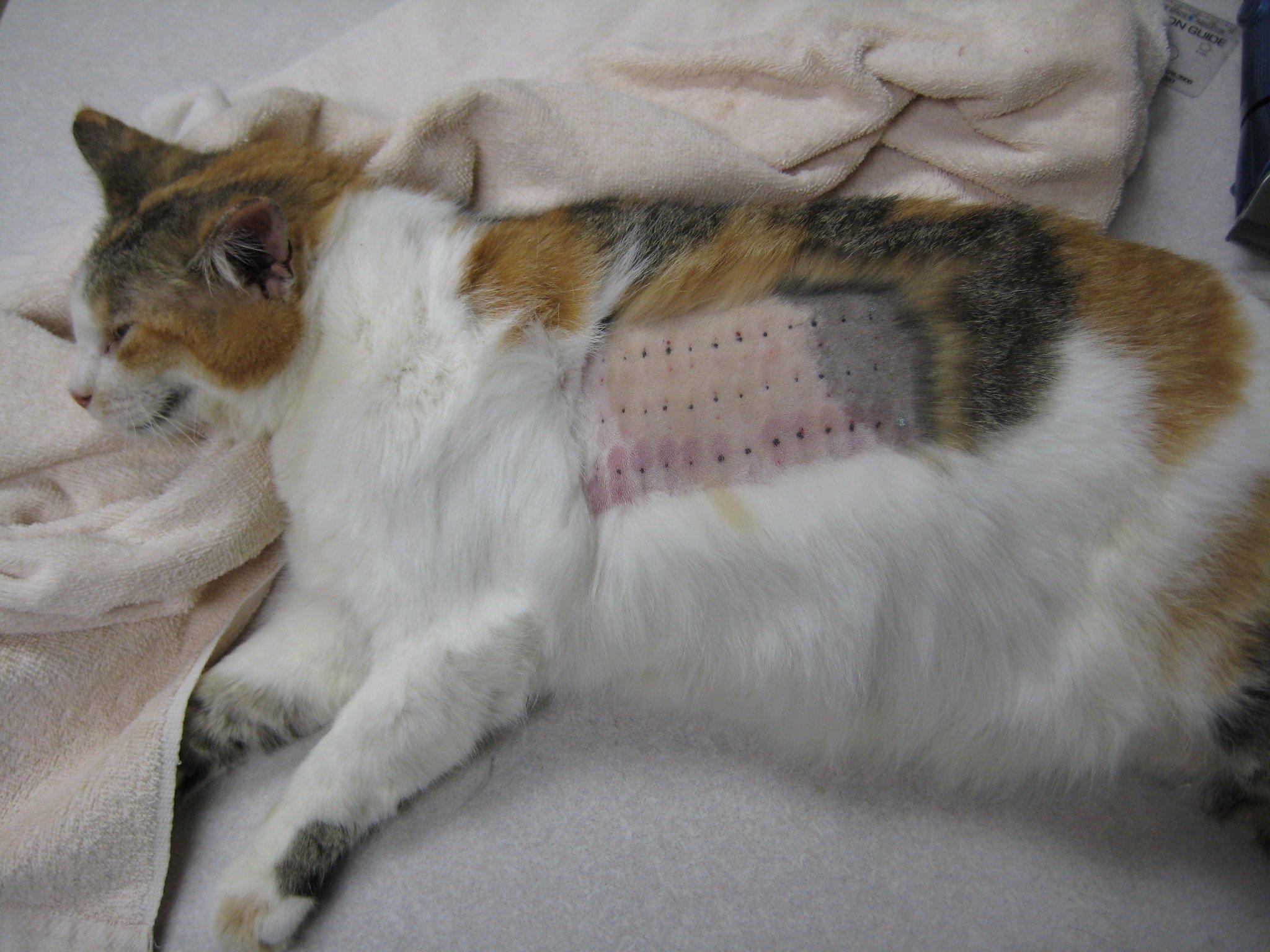
The process of intradermal allergy testing includes sedation or anesthesia (often depending on the breed), clipping of hair along the side of the chest, and injection of multiple allergens into the skin. Dermatologists then observe these sites within 15 to 30 minutes for signs of reactions and record exact allergens that cause a response.
Allergy testing in practice
Venomous Insect Testing 2 - Dog allergy test procedure
Allergy testing 1 - Cat skin testing
Equine 2 - Jeff Horse allergy test 2021
In some cases, dermatologists may perform a blood allergy test in addition to or instead of intradermal skin testing, depending on the needs of the individual patient.
The goal of allergy testing is to identify specific allergens for an individual in order to formulate a serum of these allergens that is then given as an injection or administered by mouth to de-sensitize a pet to their specific allergy triggers. This is known as Allergen Specific Immunotherapy (ASIT) and is formulated specifically for each animal based on their test results. Most often this immunotherapy is administered at home by pet owners on a pre-defined gradually increasing schedule over a period of 3-4 months. Once the appropriate volume and frequency of injection are determined, ASIT is typically continued for the life of the pet. On average, most dogs and cats receive their allergy injection every 1-2 weeks.
For those unable to administer injections, sublingual (oral) Immunotherapy is an option. Like traditional allergy injections, sublingual immunotherapy uses the results of allergy testing to formulate an allergy serum. In this case, however, it is administered by mouth, typically twice daily, every day. Unlike injectable immunotherapy, sublingual immunotherapy is a daily therapy expected to also be continued for life.
If you think your pet is suffering from atopic dermatitis, ask your veterinarian if referral to Animal Dermatology Clinic is right for your pet or contact the Animal Dermatology Clinic location nearest you.
Signs and conditions this addresses
Conditions we treat
Common questions
Ready to help your pet?
Request an appointment and our team will guide you through the next steps.